Master’s Degree Awarded to Ms. Widad Ahmed Al-Weshali in Orthodontics and Pediatric Dentistry

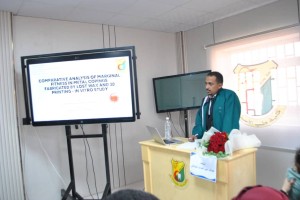
Ms. Widad Ahmed Yahya Ahmed Al-Weshali was awarded a Master’s Degree in Orthodontics and Pediatric Dentistry for her thesis titled: Prevalence and Distribution of Dental Anomalies among a Group of Yemeni Pediatric Population Based on Panoramic Radiograph Analysis, which was submitted to the Department of Orthodontics, Pediatric and Preventive Dentistry, Faculty of Dentistry– Sana’a University. The MA defense was held on Wednesday, April 22, 2026.
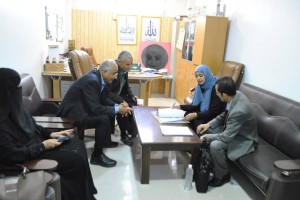
The MA Viva-voce Committee, which was formed based on a resolution issued by the Graduate Studies and Scientific Research Council, consisted of the following:
| # | Committee Members | Designation | Position |
| 1 | Prof. Khaled Abdul Salam Al-Haddad | Internal Examiner | Chair |
| 2 | Assoc. Prof. Abdulqader Mohammed Zabarah | Main Supervisor | Member |
| 3 | Dr. Nazim Mohammed Sallam | External Examiner | Member |
The thesis aimed to:
- Determine the prevalence of dental developmental anomalies (DDAs) among Yemeni children and adolescents.
- Identify the frequency of anomalies related to number, size, and shape.
- Analyze patterns of distribution and severity using digital panoramic radiography.
- Examine associations between these anomalies and demographic and anatomical variables such as gender, age, maxilla versus mandible, right versus left side, and tooth type.
The study yielded several key findings summarized as follows:
- The overall prevalence of dental anomalies was 32.3%, with nearly one-third of cases presenting at least one anomaly.
- Shape anomalies ranked first (61.8%), followed by number anomalies (21.2%), and size anomalies (13.0%).
- The most common anomalies were taurodontism (19.6%), followed by tooth agenesis (17.5%), along with a notable prevalence of root dilaceration.
- A positive correlation was observed between age and prevalence, increasing from 19.8% in younger groups to 46.6% in the 14–18 age group.
- The vast majority of anomalies (98.2%) occurred in permanent teeth, with molars being the most affected (50.9%).
- Anatomically, the maxilla was more affected (55%) than the mandible, with a slight predominance on the right side.
In light of these findings, the researcher recommended the following:
- Integrating early screening using panoramic radiography into routine pediatric dental practices and national guidelines in Yemen.
- Emphasizing early diagnosis of dental anomalies to ensure accurate, evidence-based treatment planning and to prevent future complications.
- Adopting a multidisciplinary approach in managing complex cases associated with these anomalies, such as malocclusion and functional impairments.
- Utilizing the findings of this study as a reference database to support public health strategies and dental service planning in Yemen.
The defense session was attended by a number of academics, researchers, students, colleagues, and the researcher’s family.