PhD Degree Awarded to Mr. Mohammed Abdulkareem Rajeh
- Categories Letters and Promotions - Graduate Studies, news, Regulations - Postgraduate Studies
- Date May 21, 2025
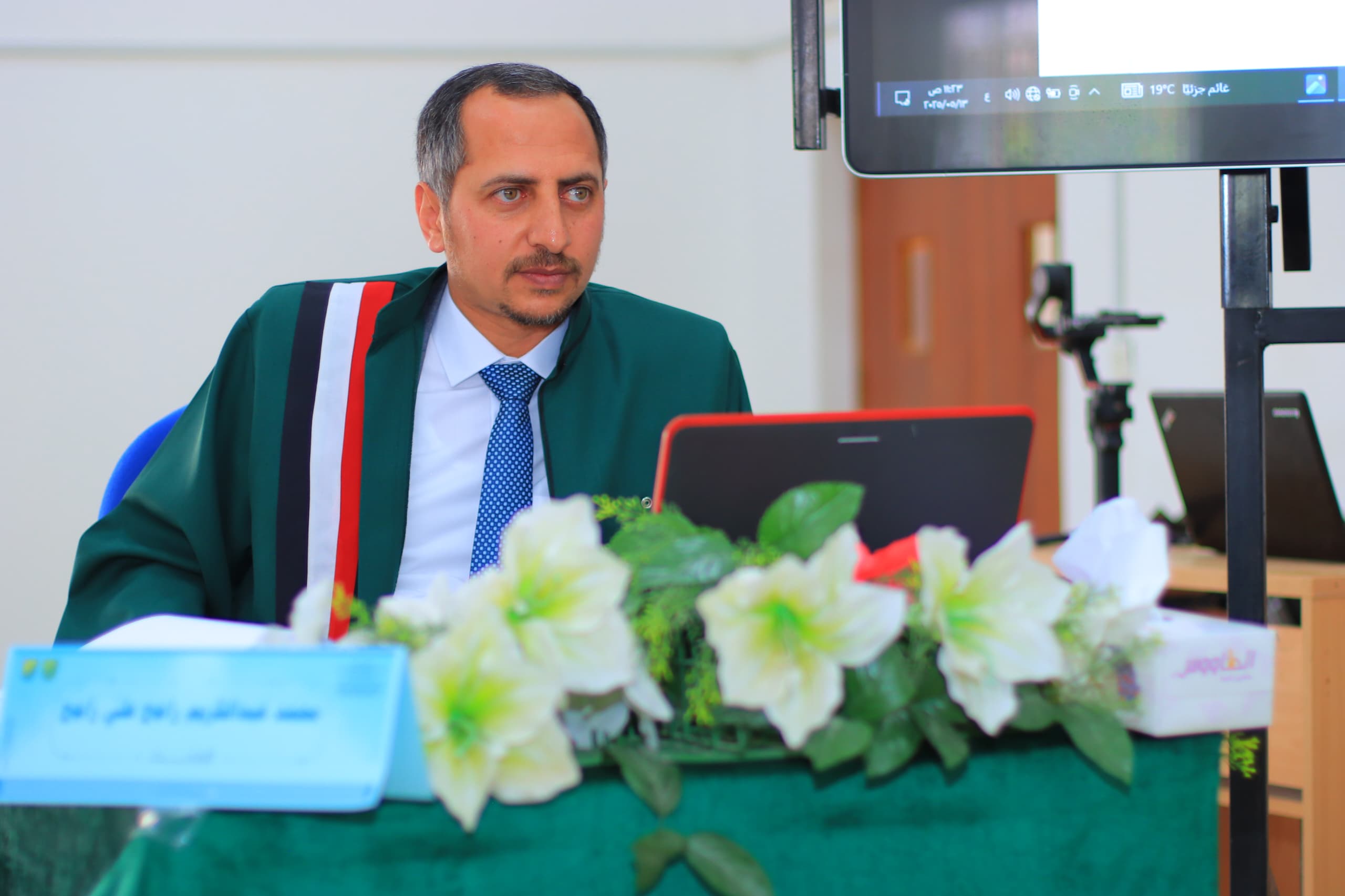
The Public Viva-Voce Examination for the PhD Dissertation hereto entitled, Agreements and Points of Divergence between Abi al-Fath al-Daylami and Abi al-Hasan al-Mawardi in their Books ‘Al-Burhan fi Tafsir al-Qur’an’ and ‘Al-Nukat wa al-‘Uyun’ from the Beginning of Surah Maryam to the End of Surah Al-Ankabut: A Comparative Study, submitted by Mr. Mohammed Abdulkarim Rajeh Ali Rajeh, to the Department of Islamic Studies, Faculty of Arts and Humanities at Sana’a University, was held on Tuesday, Dhu al-Qa’dah 15, 1446 Hijri, corresponding to May 13, 2025. The Viva-Voce Committee, which was formed based on a resolution issued by the Post-Graduate Studies and Scientific Research Council, consisted of the following:
| # | Committee Members | Designation | University | Position |
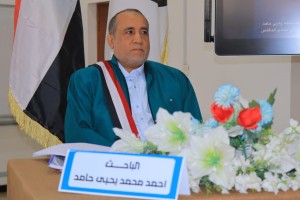
| 1 | Prof. Ali Mohammed Al-Ahdal | Internal Examiner | Sana’a University | Chair |
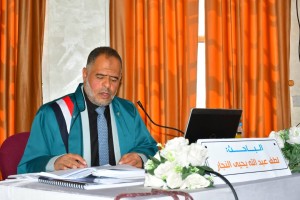
| 2 | Prof. Ahmed Mohammed Mathkour | Main supervisor | Hodeidah University | Member |
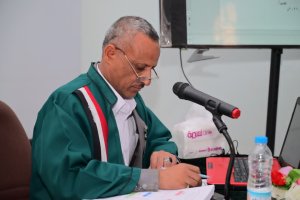
| 3 | Assoc. Prof. Mahmoud Saeed Al-Ghazali | External Examiner | Sana’a University | Member |
The dissertation aimed to:
- Introduce the two Imams Abu al-Fath al-Daylami and Abu al-Hasan al-Mawardi and examine their exegetical methodologies.
- Analyze their points of agreement and divergence in Quranic readings, reasons for revelation (asbab al-nuzul), tradition-based and opinion-based exegesis, linguistic analysis, and legal interpretations.
The dissertation reached several key findings, including:
- The study analyzed 244 exegetical issues, finding 147 points of agreement between the two imams.
- Imam Al-Daylami had 8 unique interpretations, while Imam Al-Mawardi had 89.
- Al-Daylami’s commentary was concise, whereas Al-Mawardi’s was more expansive.
- Both scholars emphasized Quranic readings, contextual revelation, and a balanced approach between narrated and rational exegesis.
- While linguistic analysis was central to their methodology, they limited extensive legal discussion (tafsir al-ahkam) primarily to Surah Al-Nur, as their works were primarily exegetical rather than jurisprudential.
The dissertation recommends the following:
- Further research on apparent-meaning exegesis and its impact on juridical preference in the two scholars’ works.
- A specialized study on their agreements and divergences in Quranic sciences.
- An investigation into their exegetical principles as demonstrated in Al-Burhan and Al-Nukat wa al-‘Uyun.
- The inclusion of comparative and analytical tafsir in graduate curricula to enhance students’ proficiency in the field.
The PhD dissertation was examined and recommended by the Viva-Voce Committee for acceptance and approval. The defense was attended by faculty members, scholars, researchers, students, colleagues, and the candidate’s family.


Discover more from Sana'a University
Subscribe to get the latest posts sent to your email.