Master’s Degree Awarded to Mr. Taha Mohammed Mansour Al-Saidi in Orthodontics
- Categories Letters and Promotions - Graduate Studies, news, Regulations - Postgraduate Studies
- Date June 23, 2025

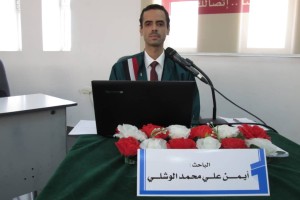
Mr. Taha Mohammed Mansour Al-Saidi was awarded a Master’s degree in the major of Orthodontics with an average of (Excellent) and a grade of (92%) for his thesis titled: Knowledge, Attitudes, and Practices of Orthodontic Specialists and Master’s Students at Remote Orthodontic Platforms in Yemen, which was submitted to the Department of Orthodontics, Pediatric Dentistry and Preventive Medicine, Sana’a University. The MA defense was held on Wednesday, May 21, 2025.
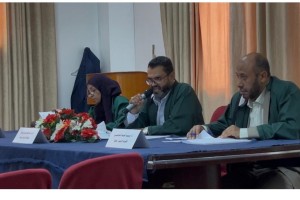
The MA Viva-voce Committee, which was formed based on a resolution issued by Graduate Studies and Scientific Research Council, consisted of the following:
| # | Committee Members | Designation | Position |
| 1 | Prof. Ameen Abdullah Al-Akwaa | Main supervisor | Member |
| 2 | Prof. Fouad Lutfi Al-Mutarrib | Internal Examiner | Chair |
| 3 | Assoc. Prof. Khaled Ahmed Al-Dhara’i | External Examiner | Member |
The thesis aimed to compare changes in the knowledge, attitudes, and practices of orthodontic specialists and master’s students at remote orthodontic platforms before and after a one-year intervention delivered via an orthodontic platform. It also sought to examine differences in outcomes based on demographic variables, assess participants’ perceptions of the platform’s perceived benefits and consultant responsiveness, and identify practical challenges encountered during interaction with the platform.
The thesis concluded with several findings. Key findings revealed that participants demonstrated a high level of baseline knowledge at remote orthodontics, with generally positive attitudes and moderate practices. The intervention significantly improved knowledge but had limited impact on attitudes and practices, which highlight ongoing challenges such as technological infrastructure limitations and privacy concerns. Notably, no demographic variable significantly influenced knowledge, attitudes, or practices pre- or post-intervention.
The Researcher presented several key recommendations, including:
- Encouraging orthodontic practitioners to integrate secure remote orthodontic technologies into routine practice to into routine practices to expand access to care and to monitor and guide patients.
- Urging academic institutions to incorporate remote orthodontics into curricula and to strengthen practical training and partnerships with technology firms for the development of tailored solutions.
- Advising policymakers to invest in digital infrastructure, establish remote orthodontic centres, and launch awareness campaigns to correct misconceptions surrounding such services.
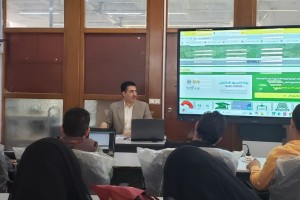
The defense was attended by a number of academics, researchers, students, the researcher’s colleagues, and members of his family.


Discover more from Sana'a University
Subscribe to get the latest posts sent to your email.