Faculty of Medicine Celebrates Graduation of 35th Batch of Human Medicine in Presence of Education & Scientific Research Minister and University President
Sana’a – Wednesday, November 19, 2025 (Jumada Al-Awwal 28, 1447 Hijri)
The Faculty of Medicine and Health Sciences at Sana’a University held a formal ceremony this morning, celebrating the graduation of the 35th batch of students from the Bachelor of Medicine and Surgery Program. A total of 380 new physicians graduated for the academic year 1447 Hijri in a distinguished event that reflected the university’s long-standing role in preparing qualified scientific and medical cadres dedicated to serving the nation and humanity.
The ceremony was attended by Minister of Education and Scientific Research Mr. Hasan Al-Saadi; Rector of Sana’a University Prof. Mohammed Al-Bukhaiti; Vice Rectors Prof. Mohammed Shukri and Mr. Abdulhafidh Thawabah; Dean of the Faculty of Medicine and Health Sciences, Prof. Mohammed Al-Shahari; Chairman of the Republican Teaching Hospital Authority, Prof. Mohammed Jahaf; General Manager of Al-Kuwait University Hospital, Prof. Abdulatif Abu Talib; as well as the faculty’s vice deans, teaching staff, representatives of health and educational institutions, and a large gathering of academics and guests.
In his address, Minister Hasan Al-Saadi extended his warmest congratulations to the graduates, noting that the graduation of this batch demonstrates the university’s ability to continue supplying the health sector with qualified professionals despite the exceptional circumstances facing the country.
He urged graduates to pursue further specialization studies through residency and fellowship programs, emphasizing that several subspecialties face a severe shortage of medical personnel—making it essential to intensify efforts to meet the needs of hospitals and health facilities in cities, villages, and remote areas.
Al-Saadi added, “The nation is in great need of this group of physicians. Your religious and national duty requires you to invest your skills and knowledge in serving your people and to make your scientific position a means for doing good, spreading health awareness, and building a healthier and more informed society.”
Rector of Sana’a University, Prof. Mohammed Al-Bukhaiti, affirmed that the university—with all its academic and administrative components—continues to fulfill its national mission by preparing scientific and medical cadres who have raised Yemen’s name in numerous international forums. He noted that many graduates of the Faculty of Medicine now practice in Arab and foreign countries with a strong professional presence.
Prof. Al-Bukhaiti stated: “This university is not merely an educational institution; it is a national and humanitarian pillar that has taken on the responsibility of preparing physicians capable of serving people and safeguarding human life.”
The Rector highlighted the efforts undertaken by the university leadership, in collaboration with the Ministry of Health and the Ministry of Education, to designate Al-Kuwait University Hospital as a university hospital under Sana’a University and to be managed by its medical staff.
He explained that the hospital now provides advanced medical services to citizens with high capacity and minimal cost, noting that the success of this project has strengthened public trust in Sana’a University and laid the foundation for a new stage of academic, research, and medical development.
He added: “The humanitarian and medical services offered today by Al-Kuwait University Hospital make us proud of every doctor who graduates from this faculty and place upon them the responsibility to continue advancing this noble profession.”
Dean of the Faculty, Prof. Mohammed Al-Shahari, welcomed the distinguished presence of state, university, and health-sector leaders. He expressed deep appreciation for their participation in celebrating the graduates, noting that such attendance reflects the scientific stature of the faculty and its vital role in serving society.
Prof. Al-Shahari affirmed that the faculty operates according to comprehensive development plans aimed at updating curricula, enhancing clinical training, and strengthening medical skills programs, ensuring the graduation of physicians who possess the scientific, practical, and ethical competencies required to serve the community.
He added that despite the challenges, the faculty has succeeded in maintaining the quality of medical education through its qualified academic staff, modern training programs, and effective institutional partnerships.
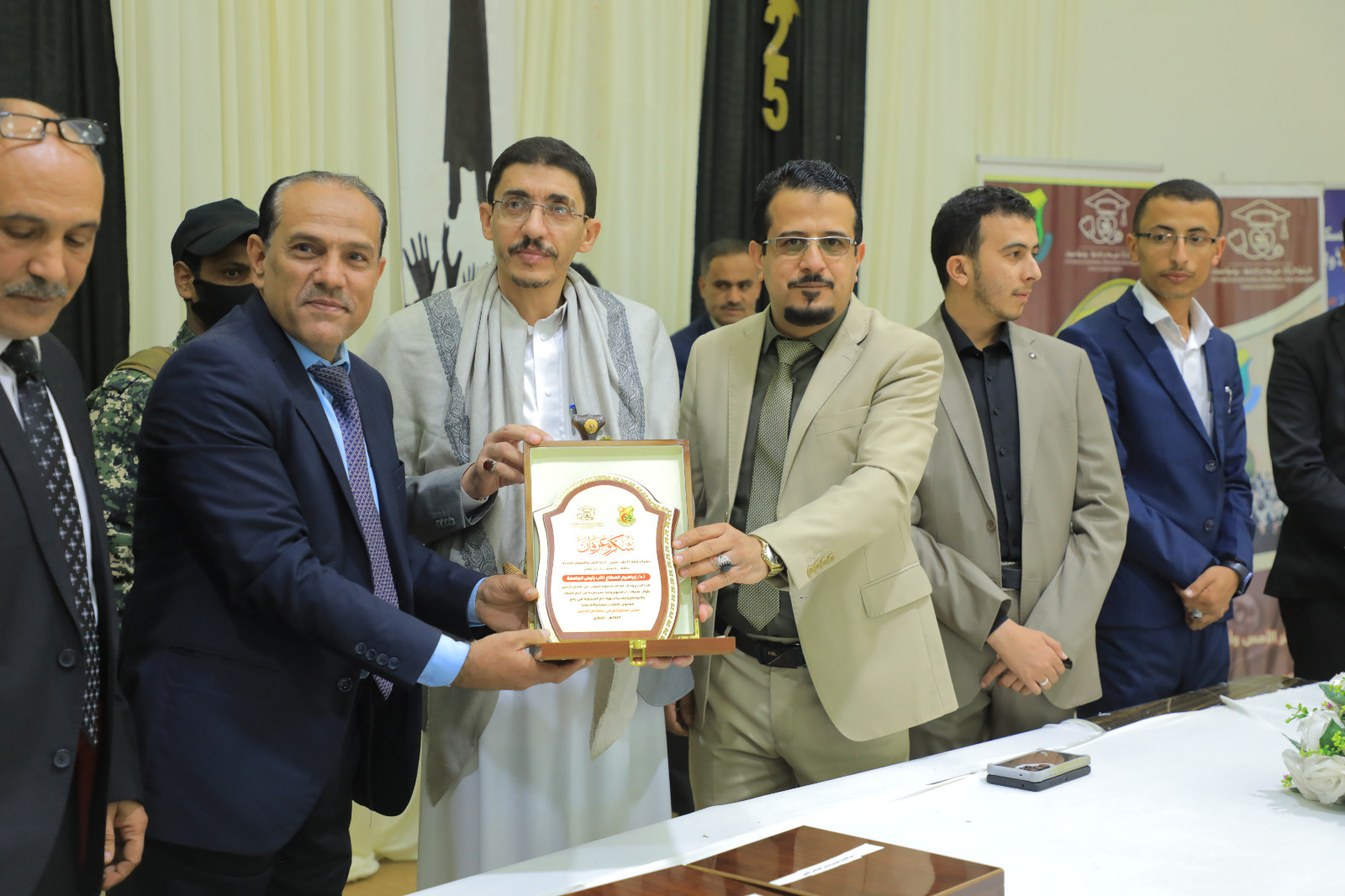
The ceremony featured several speeches highlighting the batch’s academic journey, along with presentations showcasing student research and clinical activities throughout their years of study. The event also included the honouring of the faculty’s leadership, department heads, professors, and graduating students.
The ceremony concluded with the graduates taking the medical oath—an emotional and symbolic moment marking the beginning of their new journey in serving medicine and humanity.