Master’s Degree Awarded to Ms. Hadeel Khaled Mohammed Saleh in Microbiology
- Categories Letters and Promotions - Graduate Studies, news, Regulations - Postgraduate Studies
- Date December 25, 2025

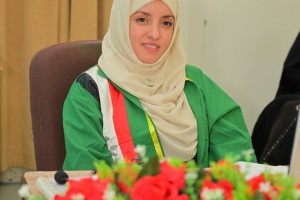
Ms. Hadeel Khaled Mohammed Saleh Khalifa was awarded a Master’s Degree in Microbiology with an average of Excellent and a grade of (95) for her thesis titled: Microbial Assessment of Groundwater in the Vicinity of Cemeteries in Dhamar Governorate, Yemen, which was submitted to the Department of Life Sciences, Faculty of Science– Sana’a University. The MA defense was held on Thursday, December 11, 2025.
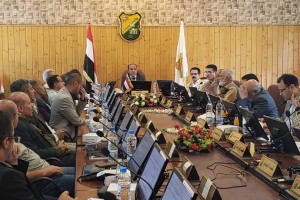
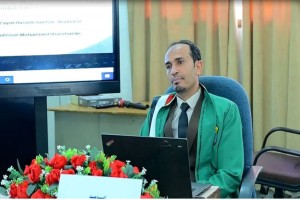
The MA Viva-voce Committee, which was formed based on a resolution issued by the Graduate Studies and Scientific Research Council, consisted of the following:
# Committee Members Designation Position
1 Prof. Salwa Hameed Ali Al-Khayyat Internal Examiner Chair
2 Assoc. Prof. Hala Jameel Aed Ali Al-Jabouri Main Supervisor Member
3 Assoc. Prof. Adel Qaed Ali Muthanna Al-Eryani External Examiner Member
The study aimed to conduct a physical, chemical, and microbiological assessment of groundwater quality in areas surrounding cemeteries, and to identify potential sources of contamination.
The study yielded a number of key findings summarized as follows:
Wells located near cemeteries exhibited clear indicators of contamination resulting from necro-leachate, including increased turbidity, altered taste, and elevated concentrations of dissolved ions, nitrogen compounds, and organic pollutants.
A widespread presence of pathogenic microorganisms was detected, notably Escherichia coli, Salmonella, and Vibrio cholerae.
Wells closest to cemeteries consistently exceeded chemical, physical, and microbiological standards, confirming that proximity to cemeteries constitutes the primary source of contamination and represents a serious public health risk.
In light of these findings, the researcher recommended:
Establishing a minimum safety buffer of 300 meters around cemeteries.
Mandating hydrogeological assessments prior to groundwater exploitation.
Implementing continuous monitoring of groundwater quality.
Utilizing GIS-based mapping in urban and environmental planning.
Creating engineered protective buffer zones.
Applying advanced water treatment technologies, including ultraviolet disinfection, chlorination, activated carbon filtration, and reverse osmosis, to safeguard drinking water sources
The defense session was attended by a number of academics, researchers, students, colleagues, and the researcher’s family.


Discover more from Sana'a University
Subscribe to get the latest posts sent to your email.

Previous post
Sana’a University President Chairs Regular Meeting of Kuwait University Hospital Board of Directors
Next post