PhD Degree Awarded to Mr. Ahmed Mohammed Hussein in Philosophy
- Categories Letters and Promotions - Graduate Studies, news, Regulations - Postgraduate Studies
- Date January 18, 2026

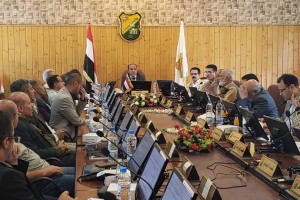
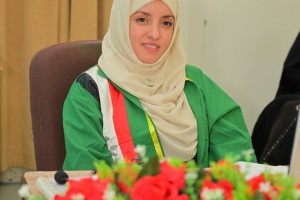
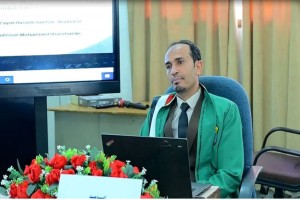
Mr. Ahmed Mohammed Hussein Al-Obaidi Al-Mahdi was awarded a PhD degree in Philosophy for his dissertation titled: Alexander Dugin and Contemporary Russian Politics, which was submitted to the Department of Philosophy, Faculty of Arts and Humanities– Sana’a University. The dissertation defense was held on Tuesday, December 30, 2025.
The PhD Viva-Voce Committee, which was formed based on a resolution issued by the Graduate Studies and Scientific Research Council, consisted of the following:
# Committee Members Designation Position
1 Assoc. Prof. Ahmed Abdullah Al-Saadi Internal Examiner Chair
2 Assoc. Prof. Hamid Ali Iskandar Supervisor Member
3 Assoc. Prof. Adel Abdu Ali Mohammed External Examiner Member
The study aimed to analyze Alexander Dugin’s political philosophy and his Neo-Eurasian theory, and to examine its impact on contemporary Russian politics through three main axes.
The first axis introduced the Fourth Political Theory as a new alternative to the three dominant ideologies: liberalism, nationalism (fascism/Nazism), and communism. The Fourth Political Theory advocates a new multipolar world order that respects traditions and civilizational diversity. It emphasizes cultural specificity, the strengthening of national identities, resistance to colonialism, and the right of peoples to choose political systems compatible with their ways of life. The theory also rejects Western liberal values and calls for the restructuring of the United Nations and its institutions, viewing them as instruments of Western hegemony
The study yielded a number of key findings summarized as follows:
The Fourth Political Theory presents an alternative model beyond liberalism, fascism, and communism. It focuses on decolonization, liberation from Western dominance, reliance on indigenous values, and the establishment of a multipolar international system in which each civilization maintains its uniqueness. The theory has generated considerable debate: critics view it as leading toward authoritarianism and anti-Western hostility, while supporters see it as a call for cultural liberation and the reinforcement of civilizational identity.
Dugin’s geopolitical philosophy calls for a re-reading and critique of classical geopolitical theories and the development of a more suitable alternative for the current international order, particularly in response to the shortcomings of theories dominant under a unipolar system. This effort culminated in the formulation of Neo-Eurasianism as a means of restoring balance to global geopolitical strategy.
At the beginning of the third millennium, the Kremlin adopted Neo-Eurasianism as an identity framework for the Russian Federation and a project for restoring its global role. Today, it has become a key reference point for the Russian state, leading Western countries to regard Dugin as the intellectual architect of Russia’s contemporary orientation and to place him on sanctions lists.
Dugin’s critique of the three major ideologies highlights the failure and decline of nationalism and communism, and explains the factors behind the persistence of liberalism. He argues that liberalism has led the world into a moral crisis, manifested in the globalization of practices legitimized in Western societies—such as genetic manipulation, cloning, gender transition, and homosexuality—without regard for cultural specificity, often imposed through military force or economic sanctions. This critique prompted Dugin to formulate the Fourth Political Theory, which respects cultural diversity and rejects interference in internal affairs.
Neo-Eurasian theory asserts that the three traditional civilizations—Islamic, Confucian, and Slavic-Russian—are distinct from Western culture. Accordingly, it envisions a world shaped by coexistence among multiple civilizations, characterized by cultural, social, and ideological diversity. The BRICS group is cited as a clear example of this emerging reality.
Current international developments, according to Dugin, indicate the possibility of a third world war, the signs of which he believes are increasingly evident. He urges China, Russia, and the Islamic world to prepare for this scenario, predicting a shift in global power in their favor and the defeat of the United States and NATO. He concludes that humanity would then be freed from what he describes as Western racial excesses, drawing historical parallels with Nazi Germany and contemporary Zionist Israel, and affirming the inevitability of the decline of U.S. dominance and that of its allies.
In light of these findings, the researcher recommended:
Establishing strategic and foresight research centers specializing in geopolitical studies to formulate short-, medium-, and long-term strategies, while simultaneously rehabilitating Arab collective consciousness through historical restructuring and engagement with accumulated global developments.
Investing in international transformations within the Arab and Islamic worlds by constructively contributing to multipolarity through the formation of influential alliances, and by leveraging the Atlantic–Eurasian rivalry to serve national independence and development.
Encouraging further research to build upon Dugin’s multipolarity project and to monitor emerging political and economic alliances and their realization in practice.
Benefiting from Dugin’s theory as a framework for Arab efforts to escape Western hegemony over political decision-making and the exploitation of the resources and wealth of the greater Arab world.
The dissertation defense was attended by a number of academics, researchers, and specialists, students, colleagues, and the researcher’s family.


Discover more from Sana'a University
Subscribe to get the latest posts sent to your email.

Previous post
PhD Degree Awarded to Mr. Hisham Ahmed Al-Faqih in Cardiovascular Medicine
Next post