Sana’a University Organizes Workshop on Master’s Program in Emergency and Disaster Management at Faculty of Applied Medical Sciences

Saturday, 24 January 2026 (5 Sha‘ban 1447 AH)
Prof. Mohammed Ahmed Al-Bukhaiti, Rector of Sana’a University, emphasized that launching high-quality academic programs aligned with community needs is a strategic priority for the University. He noted that this objective reflects the University’s academic and national responsibilities to prepare qualified professionals capable of addressing modern challenges and enhancing institutional readiness in Emergency and Disaster Management.
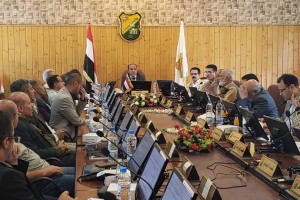
This was part of his opening address at a workshop organized by the University to review and officially announce the launch of the Master’s Program in Emergency and Disaster Management at the Faculty of Applied Medical Sciences. The workshop brought together distinguished academics and specialists, representatives from Civil Defense, the Civil Aviation and Meteorological Authority (CAMA), the Ministry of Health, the Yemen Red Crescent, as well as several hospitals and other relevant governmental and service bodies.
The workshop aimed to review the specification of the academic program, define graduate competencies, attributes and learning outcomes, as well as ensuring the alignment of the program with the practical needs and demands of the labor market in accordance with contemporary academic standards.
Prof. Al-Bukhaiti explained that the program had been the subject of in-depth discussions within the University Council, involving several related faculties, including Faculty of Agriculture, Faculty of Science, Faculty of Engineering, and Faculty of Commerce, to ensure comprehensive integration of the scientific and knowledge dimensions of Emergency and Disaster Management.
He further stressed the importance of engaging governmental, service-oriented, and field institutions in the review and design of the program, given their practical knowledge and specialized technical expertise. This collaboration, he said, strengthens the link between academic theoretical knowledge and practical application while enhancing the quality of higher education outcomes.
Prof. Al-Bukhaiti underscored that academic programs should be responsive to the genuine requirements of the labor market rather than remaining purely theoretical, ensuring the graduation of professionals capable of effectively contributing to national priorities and advancing sustainable development.
He also commended the institutional progress achieved by Sana’a University in quality assurance and academic accreditation, highlighting the University’s accumulated experience of more than 13 years in developing and describing academic programs, study plans, learning outcomes, and graduate attributes in line with both national and international standards.
In turn, Prof. Khaled Al-Khamesy, Dean of the Faculty of Applied Medical Sciences, noted that the workshop demonstrates the University’s commitment to keeping pace with national and global changes and to strengthening the role of higher education in community service by preparing highly qualified national professionals equipped with both theoretical knowledge and practical skills suitable for working in diverse environments.
He pointed out that since its establishment in early 2020, the Faculty has adopted an academic approach grounded in quality, excellence, and adherence to accredited academic standards. It has graduated two cohorts in the fields of Anesthesia, Clinical Nutrition and Dietetics, Physiotherapy, and Radiology, in addition to offering bridging programs in Prosthetics and Orthotics and Physiotherapy.
Prof. Al-Khamesy also highlighted the Faculty’s ongoing efforts to secure international professional accreditations. These efforts were crowned by one of its programs obtaining international accreditation from the International Society for Prosthetics and Orthotics (ISPO). Such achievement reflects the strength of the Faculty’s academic structure and the excellence of its graduates.
He described the Master’s Program in Emergency and Disaster Management as a distinguished professional academic program that represents a focused scientific response to an urgent national need, particularly considering the increasing global scale and complexity of natural disasters, conflicts, and humanitarian crises.
For his part, the program coordinator and national expert, Dr. Yousef Al-Shaabi, outlined the program’s objectives, academic structure, and strategic importance in building an effective national emergency and disaster management system. This system encompasses prevention, preparedness, rapid response, recovery, and the mitigation of human and material losses in accordance with international standards.
He explained that the program adopts an integrated knowledge approach, with 75% of its content drawn from applied medical and relief sciences and 25% from other related disciplines. Several faculties at Sana’a University will contribute to delivering the program through specialized academic staff, and graduates are expected to benefit from diverse employment opportunities at both local and regional levels.
The workshop also featured a presentation by Dr. Yousef Al-Makhrafi on a proposed program in Environmental Health and Climate Change, followed by an extensive academic discussion highlighting the importance of developing modern academic programs to strengthen national preparedness and build competent cadres capable of efficient management of crises and emergencies.


Discover more from Sana'a University
Subscribe to get the latest posts sent to your email.