PhD Degree Awarded to Mr. Hassan Lutf Al-Rassas in Islamic Archaeology
- Categories Letters and Promotions - Graduate Studies, news, Regulations - Postgraduate Studies
- Date August 10, 2025
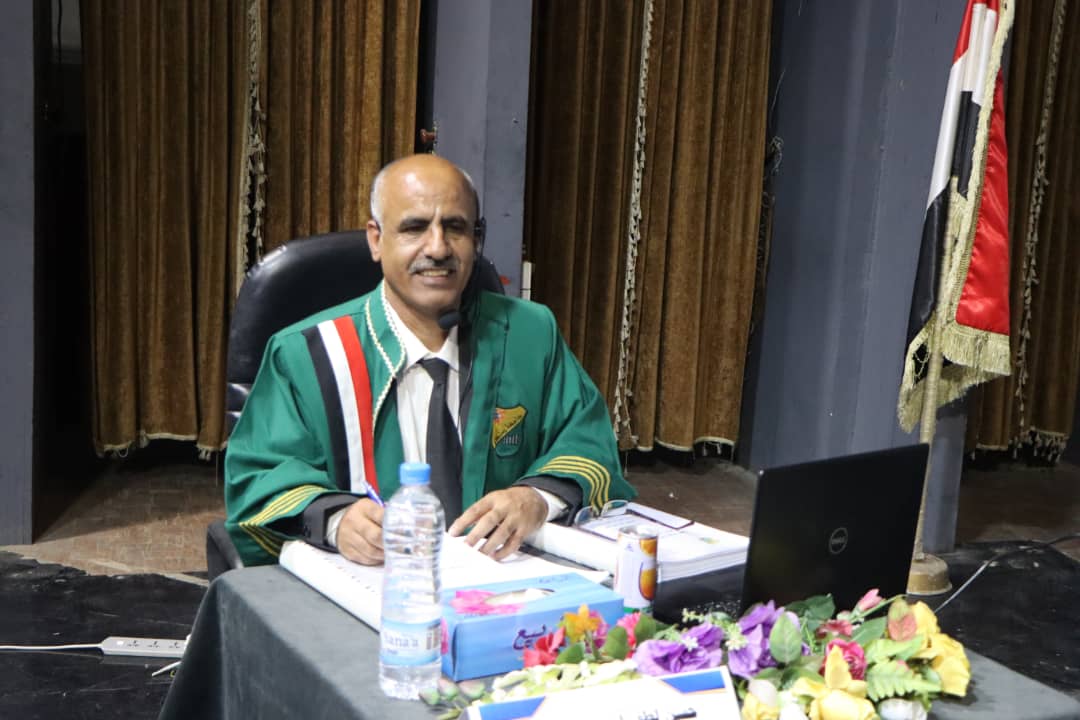
Mr. Hassan Lutf Ahmed Al-Rassas was awarded a PhD degree for his dissertation titled “Islamic Gravestone Inscriptions in Al-Qaradhain Cemetery in Saada City: A Comparative Archaeological Study,” which was submitted to the Department of Archeology and Tourism, Faculty of Arts and Humanities – Sana’a University. The PhD dissertation defense was held on Wednesday, July 23, 2025, corresponding to 28/01/1446 Hijri.
The PhD Viva-Voce Committee, which was formed based on a resolution issued by the Post-Graduate Studies and Scientific Research Council, consisted of the following:
| # | Committee Members | Designation | University | Position |
| 1 | Prof. Ghaylan Hamoud Ghaylan | Internal Examiner | Sana’a University | Chair |
| 2 | Prof. Ibrahim Ahmed Al-Muta’a | Main Supervisor | Sana’a University | Member |
| 3 | Assoc. Prof. Mabrouk Mohammed Yahya Al-Dhamari | External Examiner | Thamar University | Member |
This dissertation, which presented a descriptive and comparative archaeological study of Islamic tombstones in Al-Qaradhain cemetery in Saada, aimed to highlight the scientific and historical significance of these tombstones, examining their inscriptions, calligraphy styles, and decorative motifs. The research also sought to trace the evolution of these artifacts and identify the individuals buried there, including their titles, lineages, and key accomplishments. Additionally, the study provided insight into the artists and artisans who crafted the tombstones.
he dissertation analyzed 120 tombstones, including 85 made of limestone, four of basalt, 29 of granite, one of sandstone, and one of Al-Balaq stone.
Key findings of the dissertation include:
- The oldest tombstone examined belongs to Mohammad bin Ali bin Ahmed Al-Dahhak, who passed away in 603 Hijri, corresponding to 1206.
- The discovery of 78 new titles not previously documented in any study.
- Correction of the death date of the scholar Mohammad bin Abdullah bin Hamza bin Abi Al-Najm. While historians had cited the year 610 Hijri, the tombstone inscription reveals the correct date to be 613 Hijri.
- The first documented instance of a calligraphic correction on a tombstone during its creation, found on the stone of Mohammad bin Ali Al-Ta’i, who died in 603 Hijri, corresponding to 1206. The correction appeared in two consecutive lines on the face of the stone.
- Discovery of a single tombstone for three children—Hamama, Ahmed, and Yahya—sons of Ali bin Yahya Al-Ghussain. The stone also bore the signatures of two artisans from the same family: Hussein bin Mohammad bin Yahya Jufeira and Abdullah bin Mohammad bin Yahya Jufeira.
- Identification of seven artisans from a single family whose names had not been previously found in any artistic or architectural works.
- The study uncovered the tombstones of two artisans: Abdullah bin Mohammad bin Yahya Jufeira (d. 728 Hijri / 1328) and Mohammad bin Ali bin Mohammad bin Sulaiman (d. 792 Hijri / 1390).
Based on his research, Mr. Al-Rassas put forward several recommendations:
- Urgent archaeological surveys to document all tombstones in Saada Governorate’s cemeteries.
- Special care and attention for tombstones that have been vandalized or broken, with efforts to collect fragments, restore them, and preserve them.
- A call to competent authorities to halt random and unprofessional restoration work on tombstones and other historical artifacts.
- Building protective walls around cemeteries and assigning guards to ensure their preservation.
The PhD dissertation was examined and recommended by the Viva-Voce Committee for acceptance and approval. The PhD defense was attended by a number of academics, researchers, interested students, the candidate’s colleagues, and family members.

Discover more from Sana'a University
Subscribe to get the latest posts sent to your email.

Previous post
Master's Degree Awarded to Ms. Elham Arraf from Faculty of Agriculture, Food, and Environment
Next post