Sana’a University Participates in YITC-HE Board Meeting Chaired by the Minister of Education*
Sana’a – 18 November 2025 (27 Jumada Al-Awwal 1447 AH)*
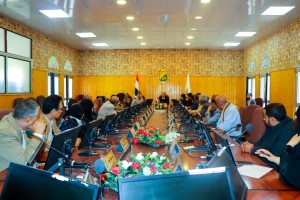
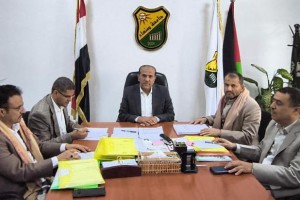
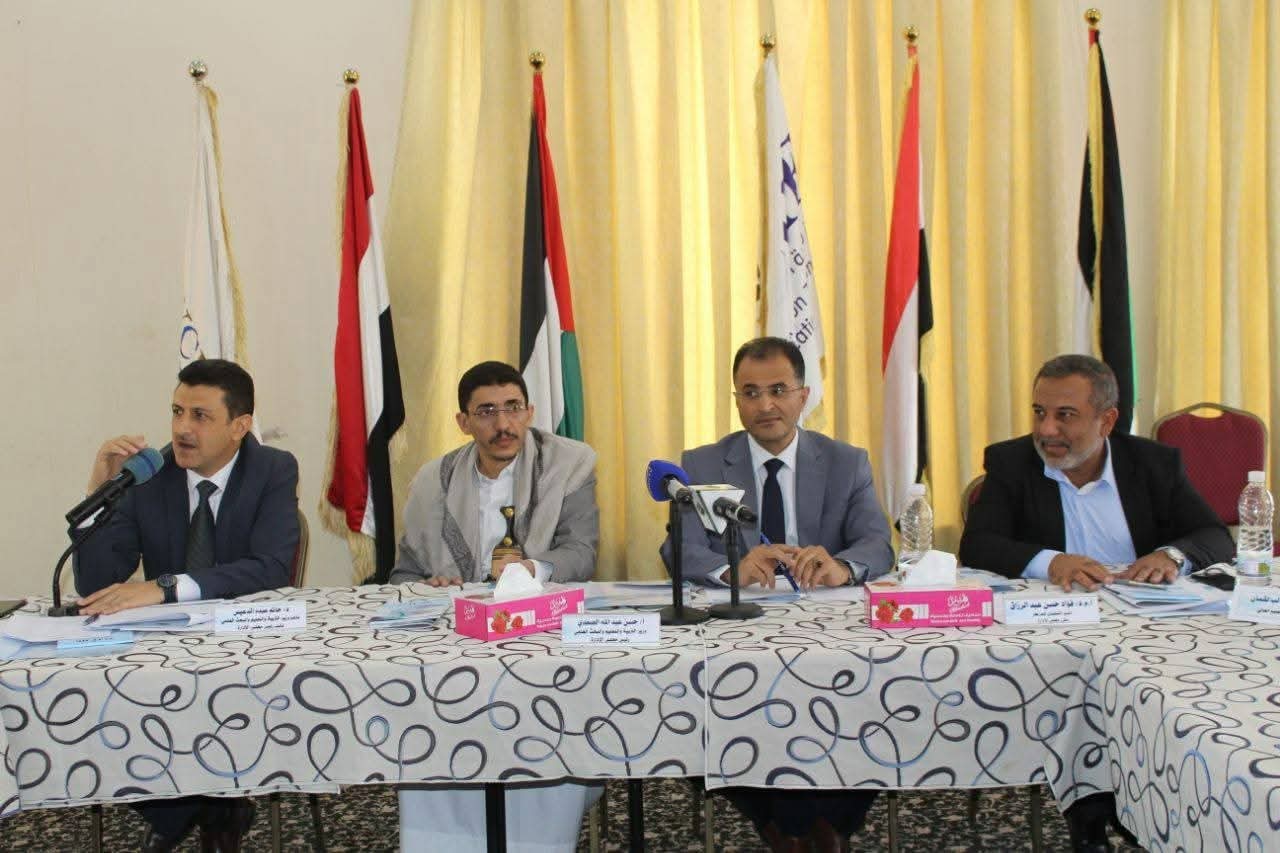
Sana’a University, represented by its Rector, Prof. Mohammed Ahmed Al-Bukhaiti, took part today in the meeting of the Board of Directors of the Yemen Information Technology Center (YITC-HE), chaired by the Minister of Education and Scientific Research, Mr. Hasan Al-Saadi.
The meeting was attended by Prof. Hatem Al-Dois, Vice Minister of Education and Scientific Research; Prof. Ibrahim Luqman, Deputy Minister for the Higher Education Sector; Dr. Zaid Al-Hadhour, Deputy Minister for the Secondary Education Sector; Dr. Adel Al-Matari, Chairman of the CAQA, and Dr. Fouad Abdulrazzaq, Executive Director of the YITC-HE; as well as board members, including rectors of public and private universities, and representatives from the Federation of Yemen Chambers of Commerce and Industry (FYCCI).
Participants reviewed the Center’s comprehensive report covering the period from January to November 2025. The report outlined key performance indicators, technical and administrative accomplishments and activities, plans to enhance digital infrastructure, progress on the unified E-portal for postgraduate programs, maintenance and operation of university systems, participation in scientific and research events, and efforts in training and capacity building.
The Board also discussed a technical report presented by Dr. Musa Ghorab, Assistant Director of the YITC-HE and Eng, Ayman Al-Moqri, which highlighted major software and technological developments. These included upgrades to automation systems, the enhancement of data exchange mechanisms, and significant advancements in the unified E-Portal for public and private universities, community faculties, and postgraduate programs.
The report confirmed progress in developing the Student Academic Records System (SAR), enabling the electronic issuance of academic documents, and completing a full software analysis of the system from admission to graduation. It also noted the creation of new databases and the establishment of operational and testing environments for 30 universities. Additional upgrades included modules for lecture management, academic processes, record transfers and deferrals, and the clearance system.
YITC-HE achievements included the updating of postgraduate templates, full automation of postgraduate processes at Sana’a University (100% completion), the development of systems for tracking academic workflows, theses, dissertations, and other research projects, integration of postgraduate students into the financial system, improved tuition fee collection mechanisms, generation of automated financial reports, addressing user feedback, enhancement of the student E-Portal to include preference updates, study plans, and single sign-on features, as well as launching a redesigned alumni system using modern technologies.
The Board further discussed issuing financial statements within the “SAR” and “FIMS” systems and linking them to the Ministry of Finance through a well-defined operational framework. It also approved integrating the SAR system with the electronic system of Dhamar University. Emphasis was placed on the important role of the Ministry of Telecommunications and the FYCCI in establishing effective partnerships.
Additionally, the Board approved providing internal servers for the unified E-Portal to safeguard national data, host university websites and academic journals, and strengthen cybersecurity defenses against cyberattacks. It also tasked the Director of YITC and the Rector of Sana’a University with reviewing the Center’s agreement with the “E-Sadad” payment platform and developing a unified vision for all universities. Moreover, it also approved the contribution of some public and private universities to support the Universities of Al-Dhalea and Saada by providing academic staff to help them complete the current academic year.
Minister Hasan Al-Saadi praised the YITC-HE leadership and staff for their sustained efforts in advancing automation, digital transformation, and network integration across universities despite limited resources. He commended the continuity of Board meetings and the progressive decisions being made in alignment with global advancements.
Prof. Hatem Al-Dois, Vice Minister of Education and Scientific Research, highlighted the importance of holding such meetings at a time when the country is implementing administrative reforms aimed at optimizing national human resources and infrastructure to achieve sustainable development. Meanwhile, Dr. Fouad Abdulrazzaq, the Executive Director of the YITC-HE, reaffirmed the Center’s commitment to promoting a culture of digital transformation in higher education, enhancing transparency and efficiency, and broadening digital services for the entire academic and educational community.
In a statement to the university’s media platform, Rector of Sana’a University, Prof. Mohammed Ahmed Al-Bukhaiti, said that “the university’s participation in this meeting underscores its commitment to strengthening cooperation with the Yemen Information Technology Center (YITC-HE) and enhancing the exchange of expertise between public and private universities. It also reflects our dedication to supporting digital transformation initiatives and developing the university’s digital infrastructure in accordance with international standards, to ensure the delivery of high-quality academic and administrative services to all students and faculty members.”


Discover more from Sana'a University
Subscribe to get the latest posts sent to your email.