Sana’a University President Directs Promoting Academic and Research Integration in Archaeology, Geography, and Remote Sensing

Sana’a – Saturday, December 6, 2025 (Jumada Al-Akhirah 15, 1447 Hijri)*
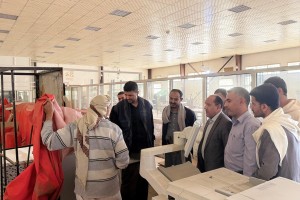
Prof. Mohammed Ahmed Al-Bukhaiti, Rector of Sana’a University, chaired today an expanded meeting dedicated to discussing a range of academic, research, and developmental issues related to the Faculty of Arts and Humanities, as well as exploring avenues of cooperation with national bodies specializing in archaeology, tourism, geography, geographic information systems (GIS), and remote sensing.
During the meeting, the University Rector emphasized the need to unify efforts among faculties, research centers, and relevant government institutions to enhance the university’s role in serving the community, preserving cultural heritage, and supporting field studies and scientific projects of national significance.
Prof. Al-Bukhaiti also emphasised the need to provide maximum media coverage and highlight the unique capabilities possessed by Sana’a University compared to other Yemeni universities. He affirmed that the university is going through a developmental phase that requires redoubled work and the expansion of scientific partnerships.
The meeting was attended by Prof. Ibrahim Ahmed Mohammed Al-Muta’a, Vice Rector for Academic Affairs; Prof. Abdulmalik Mohammed Abdullah Eissa, Dean of the Faculty of Arts and Humanities; Prof. Abdulhakim Shaif Mohammed Ghaleb, Head of the Archaeology and Tourism Department; Mr. Ubad bin Ali Al-Hayyal, Head of the General Organization of Antiquities and Museums; Dr. Khaled Mohammed Khanbari, Head of the Remote Sensing and GIS Center at the Ministry of Telecommunications and Professor of Geology at the Faculty of Petroleum and Natural Resources; Dr. Mohammed Al-Bakri, Head of the Geography and Geoinformatics Department; Dr. Mohammed Ahmed Al-Ali, Curator of the Faculty’s Archaeology and Tourism Museum; Dr. Hafidha Abdullah Ali Qasem; Dr. Balquis Salah; and Mr. Ali Hamoud Meqdam, Secretary of the Faculty of Arts and Humanities.
The meeting addressed several key areas, including the development of study plans, the updating of academic programs, the enhancement of applied scientific research and its alignment with development needs, and the activation of institutional partnerships between the university and agencies concerned with archaeology, tourism, remote sensing, and GIS. The discussions also included support for geography, geospatial analysis techniques, and the strengthening of the role of the Faculty Museum of Archaeology and Tourism, as well as expanding collaboration with the General Authority for Antiquities and Museums.
Prof. Ibrahim Al-Muta’a, Vice Rector for Academic Affairs, highlighted the importance of developing interdisciplinary programs that combine theoretical knowledge with modern technical applications to enhance student and researcher competencies and better serve societal needs.
The meeting concluded by affirming the need to follow up on the implementation of the agreed decisions, establishing practical mechanisms to activate scientific partnerships, and building joint research projects that elevate the university’s standing locally and internationally. It also emphasized revitalizing the role of the Archaeology and Tourism Museum, strengthening cooperation with the General Authority for Antiquities and Museums, and leveraging the expertise of the Remote Sensing and GIS Center in implementing joint research initiatives that reinforce the university’s scientific presence and its service to society.

Discover more from Sana'a University
Subscribe to get the latest posts sent to your email.