Master’s Degree Awarded to Ms. Samira Al-Thari in Integrated Water Resources Management
- Categories Letters and Promotions - Graduate Studies, news, Regulations - Postgraduate Studies
- Date December 28, 2025

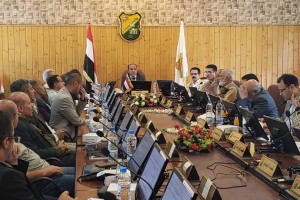
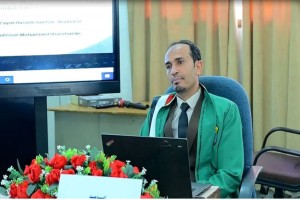
Ms. Samira Mohsen Ahmed Lutf Al-Thari was awarded a Master’s Degree in Integrated Water Resources Management for her thesis titled: The Impact of Sana’s Waste Water Treatment Plant on the Drinking Water Quality in Bani Al-Harith District -Sana’a City, which was submitted to the Water and Environment Center – Sana’a University. The MA defense was held on Sunday, December 21, 2025.
The MA Viva-voce Committee, which was formed based on a resolution issued by the Graduate Studies and Scientific Research Council, consisted of the following:
# Committee Members Designation Position
1 Prof. Nabil Abdo Al-Shawafi Internal Examiner Chair
2 Prof. Fadl Ali Al-Nuzaili Main Supervisor Member
3 Assoc. Prof. Ghanim Shamssan Nasher External Examiner Member
The study aimed to analyze the impact of the Sana’a wastewater treatment plant on the quality of drinking water sources in Bani Al-Harith District within the framework of integrated water resources management. It also sought to assess the physical, chemical, and microbiological quality of groundwater, and examine the associated health, social, and economic impacts of using contaminated water.
The study yielded a number of key findings summarized as follows:
Elevated concentrations of trace elements were detected, indicating contamination of both groundwater and soil.
Bacterial contamination was identified in several wells, linked to wastewater effluent used for irrigation.
Survey responses revealed that the most prevalent diseases among residents were diarrhea (46%), skin diseases (31%), malaria (15%), and typhoid (8%).
Girls were found to be the most affected by diarrhea (30%), followed by boys (27%), a pattern attributed to farmers’ use of untreated wastewater for irrigation and the low efficiency of the wastewater treatment plant
In light of these findings, the researcher recommended:
Upgrading the treatment plant to achieve wastewater quality acceptable for agricultural use in line with Yemeni standards.
Prohibiting the use of untreated wastewater for irrigation.
Banning the sale of crops irrigated with wastewater unless they are properly disinfected.
Strengthening monitoring of nearby wells and activating legal and awareness frameworks to protect groundwater and public health.
Mandating regular monitoring of well water quality by the General Authority for Water Resources and enforcing appropriate measures.
Providing alternative water sources for Bani Al-Harith residents due to well contamination.
Encouraging investment in treatment plants for contaminated well water.
Holding regular meetings of Water User Associations to raise awareness among farmers (men and women) about the risks of using untreated wastewater for irrigation..
The defense session was attended by a number of academics, researchers, students, colleagues, and the researcher’s family.


Discover more from Sana'a University
Subscribe to get the latest posts sent to your email.

Previous post
Master’s Degree Awarded to Ms. Hadeel Khaled Mohammed Saleh in Microbiology
Next post