Master’s Degree Awarded to Mr. Yusuf Abdulqawi Khaled in Statistics and Information

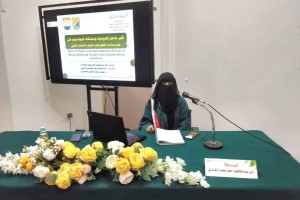
Mr. Yusuf Abdulqawi Abdullah Khaled was awarded a Master’s Degree in Statistics and Information with an average of excellent and grade of (95) for his thesis titled: The Best Model for Classifying Kidney Failure Using Linear Discriminant Analysis and Binary Logistic Regression: An Applied Study on the Typical Police Hospital in the Capital Secretariat- Sana’a (2025), which was submitted to the Faculty of Commerce and Economics – Sana’a University. The MA defense was held on Monday, June 29, 2026.
The MA Viva-voce Committee, which was formed based on a resolution issued by the Graduate Studies and Scientific Research Council, consisted of the following:
# Committee Members Designation Position
1 Assoc. Prof. Qasim Abdu Ali Al-Sharjabi External Examiner Chair
2 Assoc. Prof. Fouad Abdu Ismail Al-Mekhlafi Main Supervisor Member
3 Dr. Mohammed Mufreh Saleh Al-Aisai Internal Examiner Member
The thesis aimed to determine the most accurate model for classifying kidney failure patients by comparing linear discriminant analysis and binary logistic regression, and to identify the most significant variables affecting the classification of patients into acute or chronic kidney failure cases.
The findings revealed that both models achieved high levels of accuracy in correctly classifying the study data, with a slight relative advantage in favor of linear discriminant analysis. The results also showed that the most influential variables in patient classification were creatinine levels, white blood cell count, red blood cell count, and potassium levels.
The study recommended adopting the linear discriminant analysis model as a supportive tool for physicians in diagnosing kidney failure cases and utilizing the binary logistic regression model to interpret the probabilistic weights of the influential variables, while focusing on the key biological indicators identified by the study.
The defense session was attended by a number of academics, researchers, students, colleagues, and the researcher’s family.