Master’s Degree Awarded to Ms. Amal Al-Shaddadi in Horticulture and Its Technologies

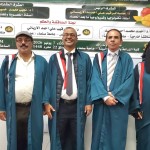
Ms. Amal Abdulhakim Ahmed Mohammed Al-Shaddadi was awarded a Master’s Degree with distinction in Horticulture Science and Technologies Program (Fruit Specialization) for her thesis titled: Effect of Humic Acid and Potassium Silicate on Growth of Mango Seedlings under Salinity Stress Conditions, which was submitted to the Department of Horticulture and Its Technologies, Faculty of Agriculture, Food and Environment– Sana’a University. The MA defense was held on Tuesday, July 7, 2026.
The MA Viva-voce Committee, which was formed based on a resolution issued by the Graduate Studies and Scientific Research Council, consisted of the following:
# Committee Members Designation Position
1 Prof. Ahmed Mohammed Ahmed Eid External Examiner Chair
2 Dr. Abdulraqib Ali Ahmed Al-Eryani Main Supervisor Member
3 Prof. Ahmed Khaled Yahya Al-Hudouni Internal Examiner Member
The study aimed to evaluate the effects of irrigation water salinity on the growth of mango seedlings (Timor cultivar) and to assess the effectiveness of humic acid and potassium silicate in mitigating salinity stress and improving seedling growth and soil characteristics.
The findings revealed that increasing irrigation water salinity led to reduced vegetative growth of the seedlings and increased salt accumulation in both the soil and plant tissues. In contrast, the application of potassium silicate and humic acid, either individually or in combination, significantly improved plant growth, enhanced nutrient uptake efficiency, and alleviated the adverse effects of salinity stress. The combined treatment produced the best results under moderate salinity levels.
The study recommended relying on irrigation water without additives under low-salinity conditions to reduce costs and avoiding the use of highly saline water without applying ameliorative treatments. It also recommended foliar application of potassium silicate at a concentration of 1.5 g/L combined with humic acid at a concentration of 2 g/L under moderate to high salinity conditions, due to its effectiveness in improving seedling growth, increasing nutrient uptake efficiency, and mitigating the effects of salinity stress.
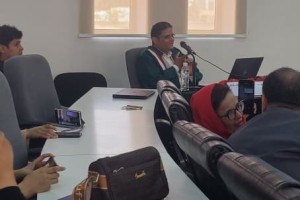
The defense session was attended by a number of academics, researchers, students, colleagues, and the researcher’s family.