Master’s Degree Awarded to Mr. Mohammed Al-Asbahi in Accounting
- Categories Letters and Promotions - Graduate Studies, news, Regulations - Postgraduate Studies
- Date May 20, 2026

Mr. Mohammed Ahmed Hussein Abdullah Al-Asbahi was awarded a Master’s Degree in Accounting with an average of excellent and a grade of (93%) for his thesis titled: The Impact of Auditors’ Compliance with International Codes of Professional Ethics and Conduct on Reducing Audit Risks: A Field Study on Audit Firms in the Republic of Yemen, which was submitted to the Department of Accounting, Faculty of Commerce and Economics – Sana’a University. The MA defense was held on Tuesday, May 5, 2026.
The MA Viva-voce Committee, which was formed based on a resolution issued by the Graduate Studies and Scientific Research Council, consisted of the following:
# Committee Members Designation Position
1 Assoc. Prof. Youssef Abdo Rashid Al-Rubaie Internal Examiner Chair
2 Dr. Abdullah Ahmed Omar Bamashmous Main Supervisor Member
3 Dr. Ahmed Mohammed Ali Al-Bayadi External Examiner Member
The study aimed to:
Examine the impact of auditors’ compliance with international professional ethics and conduct rules on reducing audit risks, including inherent risk, control risk, and detection risk.
The study applied a descriptive-analytical approach in developing the theoretical framework, reviewing previous studies, and deriving hypotheses. It conducted a field study through a questionnaire targeting 175 licensed and practicing auditors during the years 2025–2026, of which 162 valid questionnaires were analyzed, representing a response rate of 93%.
The study yielded several key findings summarized as follows:
Auditors demonstrated a very high level of compliance with international codes of professional ethics and conduct.
There was a statistically significant impact of auditors’ compliance with these ethical and professional standards in reducing audit risks in the Republic of Yemen.
In light of these findings, the researcher recommended the following:
Strengthening the ethical and professional framework within audit firms by reinforcing the principles of integrity, objectivity, professional competence and due care, confidentiality, and professional conduct in internal policies.
Enhancing auditors’ competence and professional skepticism through expanded continuous training programs in risk assessment and management estimates.
Improving audit risk assessment methodologies and adherence to international standards by systematically linking risk assessment with response procedures, with greater emphasis on evaluating internal controls and obtaining sufficient and appropriate audit evidence.
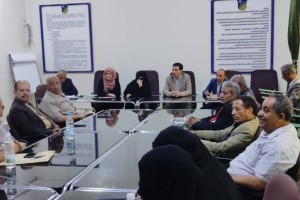
The defense session was attended by academics, researchers, students, interested participants, as well as the researcher’s colleagues, friends, and family members.