PhD Degree Awarded to Mr. Ahmed Al-Shuaibi in Islamic Studies Curriculum and Teaching

Methods
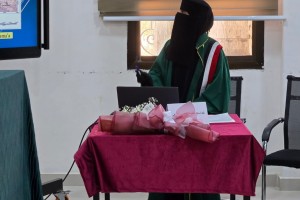
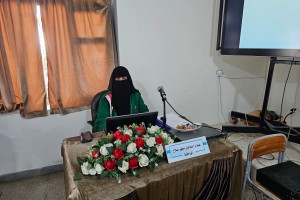
Mr. Ahmed Mohammed Abdullah Fadhel Al-Shuaibi was awarded a PhD degree in Islamic Studies Curriculum and Teaching Methods for his dissertation titled: The Effectiveness of a Quality Standards-Based Training Program in Developing Professional Performance and Inferential Thinking among High School Teachers of the Holy Qur’an and Its Sciences in the Capital Secretariat, and Their Attitudes toward the Profession, which was submitted to the Department of Islamic Studies Curriculum and Teaching Methods, Faculty of Education –Sana’a University. The dissertation defense was held on Tuesday, June 23, 2026.
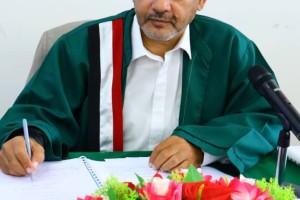
The PhD Viva-Voce Committee, which was formed based on a resolution issued by the Graduate Studies and Scientific Research Council, consisted of the following:
# Committee Members Designation Position
1 Prof. Hameed Farhan Abdulaleem Al-Afif External Examiner Chair
2 Prof. Abdulsalam Abdo Qasem Al-Mekhlafi Main Supervisor Member
3 Prof. Mohammed Ahmed Yahya Al-Jalal Internal Examiner Member
The dissertation aimed to:
Examine the effectiveness of a training program based on quality standards in improving the professional performance of high school teachers of the Holy Qur’an and its sciences in the Capital Secretariat.
Assess the program’s impact on developing teachers’ inferential thinking skills.
Explore teachers’ attitudes toward the teaching profession following participation in the training program.
The study yielded several key findings summarized as follows:
A comprehensive list of quality standards for teachers of the Holy Qur’an and its sciences was developed, consisting of 20 standards and 98 performance indicators distributed across five domains: teacher competencies, planning, implementation, classroom management, and assessment and testing.
The study identified three principal inferential thinking skills: induction, deduction, and inference.
A quality standards-based training program was designed and developed, comprising three training modules: quality standards, professional performance indicators, and inferential thinking.
The program proved effective in enhancing both professional performance and inferential thinking among participating teachers.
In light of these findings, the researcher recommended the following:
Utilizing the developed training program in the professional development of teachers of the Holy Qur’an and its sciences.
Establishing national standards for evaluating teacher performance in general, and Qur’an teachers in particular, in alignment with international standards.
Developing national criteria for selecting student teachers enrolled in departments of Qur’anic studies and sciences.
Promoting the integration of quality standards and higher-order thinking skills into teacher preparation and training programs.
The dissertation defense was attended by a number of academics, researchers, and specialists, students, colleagues, and the researcher’s family.