Master’s Degree Awarded to Ms. Buthaina Bahawerth in Horticulture and Its Techniques
- Categories Letters and Promotions - Graduate Studies, news, Regulations - Postgraduate Studies
- Date May 23, 2026

Ms. Buthaina Othman Abdullah Bahawerth was awarded a Master’s Degree in Horticultural Science and Techniques for her thesis titled: Using Sodium Azide and Harmal Extract to Create Genetic Mutations in Yemeni Coffee (Coffea arabica L.), which was submitted to the Department of Horticulture and Its Techniques, Faculty of Agriculture, Food, and Environment – Sana’a University. The MA defense was held on Saturday, May 16, 2026.
The MA Viva-voce Committee, which was formed based on a resolution issued by the Graduate Studies and Scientific Research Council, consisted of the following:
# Committee Members Designation Position
1 Assoc. Prof. Hassan Abduljabbar Al-Dobai Internal Examiner Chair
2 Assoc. Prof. Mahasen Abdo Al-Munibari Main Supervisor Member
3 Assoc. Prof. Khaled Ali Noman Al-Hakimi External Examiner Member
The thesis aimed to:
Investigate the role of chemical mutagens, particularly sodium azide, and natural mutagens, specifically Peganum harmala seed extract, in inducing genetic changes that lead to mutations in Arabica coffee plants (Coffea arabica L.).
Develop a scientific and research protocol that could be adopted in genetic improvement programs for Yemeni coffee to address the environmental and biological challenges affecting coffee cultivation in Yemen.
The study yielded several key findings summarized as follows:
Treating seeds with Peganum harmala seed extract represented a novel approach in coffee research, although it did not clearly demonstrate morphological variations during the early stages of plant growth, indicating the need for continued experimentation to determine suitable dosages.
The observed mutations recorded in the cotyledon leaves and the true leaves developing at the plant’s first node confirmed the stimulatory effect of sodium azide on genetic material, resulting in detectable changes in Yemeni coffee consistent with findings from previous studies conducted outside Yemen on other varieties.
The research opens broad prospects for the use of chemical agents and natural extracts in inducing mutations, not only in coffee crops but also in improving local varieties of other agricultural crops.
In light of these findings, the researcher recommended the following:
Intensifying efforts to use chemical mutagens, particularly sodium azide, as a safe and effective method for inducing mutations in Yemeni coffee, thereby supporting genetic variation, breeding, and genetic improvement to enhance resistance to environmental and biological stresses and improve quality traits.
Strengthening governmental, cooperative, and private-sector efforts to support coffee research and raise awareness about the importance of genetic improvement studies for Yemeni coffee by encouraging further research and studies in this field, especially in Yemen as the crop’s country of origin.
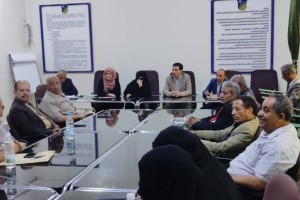
The defense session was attended by a number of academics, researchers, students, colleagues, and the researcher’s family.