Sana’a University Organizes Workshop to Review and Launch Master’s Program in Anesthesia at Faculty of Applied Medical Sciences

Sana’a – Sana’a University Media Center
Sunday – April 19, 2026 (02 Dhul-Qa’dah 1447 AH)
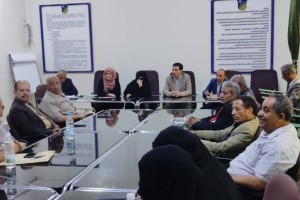
Sana’a University organized a scientific workshop today at the Faculty of Applied Medical Sciences to review and formally introduce the Master’s Program in Anesthesia, with the participation of a number of academics and medical specialists.
The program is part of the University’s ongoing efforts to enhance the capacity of the healthcare workforce by preparing qualified professionals with advanced clinical skills in anesthesia management within operating rooms and intensive care units. The initiative aims to address the national shortage of anesthesia specialists and support the needs of the healthcare sector.
In his remarks, Dr. Abdulhafidh Thawab, Rector’s Assistant for Hospitals and Medical Faculties, emphasized the importance of continuously reviewing and updating academic curricula based on sound scientific principles. He highlighted the need to carefully consider feedback and ensure clear differentiation between the fields of anesthesiology and anesthesia sciences, given the significant legal and professional responsibilities borne by anesthesiologists in clinical settings.
He also stressed the importance of adopting the professional title “Anesthesia Specialist” to safeguard graduates’ rights and enhance their career prospects. Furthermore, he noted that the Faculty offers specialized programs that complement medical education, including nutrition, a field that faces a notable shortage in public hospitals despite its critical importance.
For his part, Dr. Khaled Al-Khamisi, Dean of the Faculty, stated that the launch of the Master’s Program in Anesthesia represents a significant addition to the Faculty’s academic offerings and a practical response to the growing demand for this vital specialization. He noted that despite its relatively recent establishment, the Faculty has made notable progress by introducing high-quality undergraduate programs aligned with labor market needs.
He added that the Faculty has also launched bridging programs in Prosthetics and Orthotics, as well as Physiotherapy, contributing to the graduation of qualified professionals serving the community. He further highlighted that the Prosthetics program has received international accreditation from the International Society for Prosthetics and Orthotics in Switzerland.
Meanwhile, Dr. Idris Idris, Program Coordinator, outlined the objectives of the program, which focus on advancing scientific research, developing critical analysis skills in medical studies, and promoting ethical and professional standards in clinical practice. He explained that the program has been designed according to modern academic standards that integrate theoretical knowledge with practical training to ensure graduates are well-equipped to provide safe and effective anesthesia care.
The program consists of 36 credit hours delivered across three stages, including coursework and academic activities, followed by a clinical residency phase conducted alongside the preparation of a thesis proposal, culminating in the completion of the Master’s thesis. Admission is open to graduates holding a bachelor’s degree in anesthesia or in medicine and surgery, subject to passing a written test and a personal interview.
The workshop concluded by underscoring the importance of the program in strengthening the healthcare sector through the preparation of specialized professionals in anesthesia and intensive care, ultimately contributing to the improvement of medical service quality in the community.