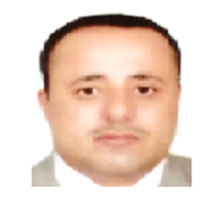
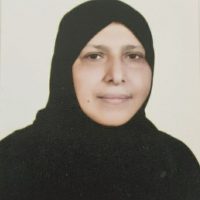
Amira Ali Mohammed Al-Harethi
Personal Information:
- Amira Ali Mohammed Al-Harethi
- Place of birth: Sana’a, Yemen
- Email: a.alharethi@su.edu.ye
- Google scholarhttps://scholar.google.com/citations?user=fkHmBn4AAAAJ&hl=en
Summary:
Detail-oriented microbiologist and nanobiotechnologist with strong expertise in nanoparticle synthesis, phytopathology, fungal identification, and molecular biology. Experienced in teaching, research leadership, and scientific training with strong contributions to conferences and academic development.
Achievements: Recording the first genetic isolation in Yemen of the late blight fungus Phytophthora infestans in the American Gene Bank (NCBI) No. OQ119020, and the strain was named Pi Alharethi YEM2021.
GenBank’s website, https://www.ncbi.nlm.nih.gov/nuccore/2417000057
Education:
- 2024: PhD, Nanobiotechnology-Microbiology Biology Dept., Faculty of Science, Sana’a University, Yemen
- 2013: M.Sc. in microbiology. Biology Dept., Faculty of Science, Sana’a University, Yemen. Graduation grade: 90%
- 2007: B.Sc. in microbiology. Biology Dept., Faculty of Science, Sana’a University, Yemen, Graduation grade: 84%, third class honor
Technical & Practical Skills
- Proficient in preparation and characterization of nanomaterials.
- Isolation and identification of fungi, especially Phytophthora infestans
- Screening for enzymes and mycotoxins.
- Molecular techniques: DNA extraction, Real-time PCR, ELISA
- Analytical method: TLC, HPLC
- Data analysis using OriginPro, MEGA11, ImageJ, X’Pert HighScore Plus
Online Education
- 2020 : What is Data Science?, Online course , authorized by IBM
- 2020: Python for Genomic Data Science by Johns Hopkins University, Coursera.
- 2020 Bioinformatic Methods I, Online Course, University of Toronto, Coursera.
- 2020: Genomic Technologies in Clinical Diagnosis: Molecular Techniques, Online course, University of London, Future Learn
- 2018: Writing in Science, Online course with honor, Stanford University, California, United States
Experience:
- 2020 till now Lecturer at the College of Applied Medical Sciences, Sana’a University
- 2019 till now Teaching assistant at the medical college., Emirates International University, Sana’a, Yemen.
- 2015 till now: teaching assistant at the faculty of science, biology department., Sana’a University, Yemen .
- 2007-2008: Head and lecturer of Medical Laboratory Department., Faculty of Science, Al-Hikma University, Sana’a, Yemen
- 2008-2009 Lecturer at the Medical Laboratory Department., Faculty of Science, Al-Afaq University, Sana’a, Yemen
- 2011-2018: Biology teacher, IGCSE and A-level curriculum, Al-Nahdh Modern School, American International School Sana’a, Yemen.
Practical experience
- Preparation and characterization of nanomaterials.
- Isolation and identification of fungi from different resources.
- Screening for mycotoxin in vitro and in vivo ( Extraction, detection, and identification).
- Screening the enzymatic activities of fungi.
- Experience molecular biology technique TLC, HPLC, PCR and
Conferences and
- Participant – 3-Minute Thesis (3MT) Competition in Hamad Bin Khalifa University (HBKU).
- 2018: Nanotechnology and Medical Science, Misr Public Library, Giza, Egypt.
- 2019: First International Medical Laboratory Day, Republican Hospital, Sana’a, Yemen.
Volunteer work:
- Volunteer in Al-Shafaqa Institution for renal failure and cancer patients’ care
- Volunteer in the charitable organization Yemen Mercy for Dutch Expatriate Women. Implement a number of charitable projects in Yemen since.
Workshops
- 2021 privet training in preparation and characterization of nanomaterials, nanotechnology, & Advanced Material Central , Agriculture Research Center Egypt.
- 2021: Private training in the properties of nanomaterials, Nano pesticides, and Nano fertilizers, Arab Center for Nanotechnology, Egypt.
- 2021: Practical application of IVF & ICSI, Walad & Bent ICSI Center, Egypt.
- 2021 Practical Training in Infertility and Genetic Testing Creative Egyptian Biotechnologist, Egypt.
- 2019: Re-emerging of Infectious Diseases in Yemen, The American Society for Microbiology, Sana’a University, Yemen.
- 2019: Introduction to Bio-Risk Management, Biology Department., Sana’a University, Yemen.
- 2020: Molecular Cloning: Strategy and Application, University of Kufa, Iraq.
- 2020 FISH Techniques: Types and Application, University of Kufa, Iraq.
- 2018: Microbiology research skills, ZEWALL CITY, Cairo, Egypt.
- 2018 Real-Time PCR, Arab Society of Stem cell and Molecular Biology, Giza, Egypt.
- 2018: Test tube Baby: Practical and theoretical training, Creative Egyptian Biotechnologist, Egypt
Supervisor for graduate student researchers
- 2009: Prevalence of leukemia and its type in Sana’a City, Laboratory Student, Faculty of Medical Science, Al-Hikma University, Sana’a, Yemen.
- 2010: Carriage rate of Salmonella typhi among food handlers, Laboratory students, Faculty of medical Science, Al-Hikma University, Sana’a, Yemen.
Publications
https://orcid.org/my-orcid?orcid=0000-0003-4958-4839
- Al-Mekhlafi, N.A., Al-Harethi, A.A. & Alzanam, N.Y. Bioefficacy of Trichoderma citrinoviride against some plant pathogenic fungi. Sci Rep (2025). https://doi.org/10.1038/s41598-025-29663-2 [Q1]
- Sharif, M., Mahmood, A., Kanwal, A, Al-Harethi et al. Facile synthesis of aminobiphenyl sulfonamides via Chan–Lam coupling and their biological evaluation as potent carbonic anhydrase inhibitors. Sci Rep 15, 25661 (2025). https://doi.org/10.1038/s41598-025-10048-4 [Q1]
- Alkhyat, S., Ahmed Al-Garadi, M., Mohammed Ahmed Mayas, S., Abdulrahman Al Zubairy, M., Ali Mohammed Al-Harethi, A., & Salem Saeed Baraba’a, S. (2025). Prevalence and Risk Factors for Helicobacter pylori Infection among Gastrointestinal Patients in Dhamar City, Yemen. Sana’a University Journal of Applied Sciences and Technology, 3(5), 1155–1163. https://doi.org/10.59628/jast.v3i5.1643
- Khan, J., Udin, W., Rahman, S. U., Al-Harethi, A & et al.. (2025). Enhancing the optoelectronic and mechanical response of MgXCl (X = Rb, Cl) for advanced energy conversion applications. Scientific Reports, 15, 29509. https://doi.org/10.1038/s41598-025-97019-x [Q1]
- Sharif, M., Mahmood, A., Kanwal, A., Al-Harethi, A., Amira, A., et al. (2025). Facile synthesis of aminobiphenyl sulfonamides via Chan–Lam coupling and their biological evaluation as potent carbonic anhydrase inhibitors. Scientific Reports, 15(1), 25661. https://doi.org/10.1038/s41598-025-10048-4 [Q1]
- Saleem, I., Asad, W., Kiran, T., Al-Harethi, A., et al. (2025). Enhancing spinach growth with a biofertilizer derived from chicken feathers using a keratinolytic bacterial consortium. BMC Microbiology, 25(1), 207. https://doi.org/10.1186/s12866-025-03866-z [Q2]
- Al-Harethi, A. A., Abdullah, Q. Y., AlJobory, H. J., Anam, A. M., Arafa, R. A., & Farroh, K. Y. (2024). Zinc oxide and copper oxide nanoparticles as a potential solution for controlling Phytophthora infestans, the late blight disease of potatoes. Discover Nano, 19(1), 105. https://doi.org/10.1186/s11671-024-04040-6 [Q2]
- Al-Harethi, A. A., Abdullah, Q. Y., & Al-Jobory, H. J. (2024). Phytophthora infestans culture media: A comparative study of cost-effective V8 Agar and Rye Agar. Sana’a University Journal of Applied Sciences and Technology, 2, 103–106.
- Al Harethi, A. A., Abdullah, Q. Y. M., Al Jobory, H. J., (2023). First report of molecular identification of infestans causing potato late blight in Yemen. Scientific Reports, 13(1), 16365. https://doi.org/10.1038/s41598-023-43510-2 [Q1]
- National Center for Biotechnology Information (NCBI). (2023). Phytophthora infestans isolate Pi_Alharethi_YEM2021 internal transcribed spacer 1, partial sequence; 5.8S ribosomal RNA gene and internal transcribed spacer 2, complete sequence; and large subunit ribosomal RNA gene, partial sequence. Retrieved August 10, 2025, from https://www.ncbi.nlm.nih.gov/nuccore/2417000057
- Abdullah, Q., Mahmoud, A., & Al Harethi, A. (2016). Isolation and identification of fungal post-harvest rot of some fruits in Yemen. PSM Microbiology, 1, 36–44. https://www.researchgate.net/publication/307849646_A_peerreviewed_journal_PSM_Microbiology_Isolation_and_Identification_of_Fungal_Post-harvest_Rot_of_Some_Fruits_in_Yemen
- Al Harethi, A. A. (2016). Fruits rotting fungi in relation to enzymes and mycotoxins production. LAP Lambert Academic Publishing.
Other Members
Nousiba Lotf Jaml
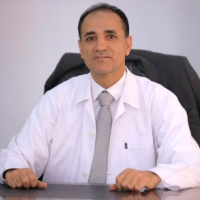
Anas. A. H. Almahbashi
Samar Mohammed Ali Aljarbani
Ersal Hamood Qaid Abdullah Al-Ghobari
khawlah mohammed soltan shrf al deen

Ghadeer Ahmed AL_Nehmi
Samar Saleh Manaa AL- Midamh
Haneen Abduljaleel AbduAllah Radman Alhammadi
Fatima Ahmed Alhadi

Given Names Abdulsalam Ali Ali Ahmed
khawlah mohammed soltan shrf al deen
Taghreed Mohammed Mohammed Al-Yazelly.

Ebtesam Hassan Lutf Al-Hamzi
Nada Mohammed Hamid Al Hamdani
Dr. Eshraq Ahmed Ali Al-Khalqi
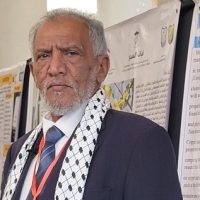
Dr. Qais Yusuf Muhammad Abdullah

Sami Ahmed Muthanna Al-Barati
Fatima Muhammed Hussain Shadiwa
Ebtisam Faisal Saeed Shamsan
Bushra Yahya Hassan Al-Khatib
Aziza Musleh Taj Al-Deen

MAYSOON AL ZUBAIRY

Mukhtar Abdo Mohammed
Anwar Mohammed Abdul Majeed Ali Masood
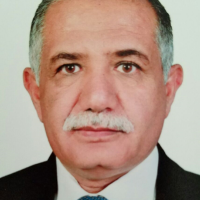
Arif Saeed Aqlan Alhammadi

Mohammed Farhan Mahyoub Al-Hilali

Faten Abdu Ali Sharaf Al-deen
Hanan Abdulkarim Mohammed Saleem
Salwa Hamid Alkhyat

SAEED MUNASSAR SAEED AL-GHALEBI
Soad Humead Ali Al-Khiat
Ebtehaj Hassan Awoni Al-Ajmi
Nesrain AbdulKarem Taher Al-Mekhlafi
Wea’am Mahyoub Ahmed Qasim Al Kamali

Abdulrahman Abdullah Hasan Humaid
Hala Jameel Aeid Al Jobory
Ashar Hassan Ali Khalil
Enas Jabir Ali AL-Sanabani
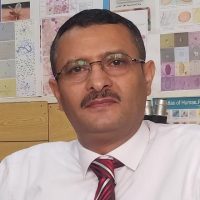
Abbas Mohammed Ahmed Saif Al-Azab
Abdo Mohamed Ali Dahmash
Mahmoud Mohammed Al-Azab
Elham Ameen shukri Al-shibani